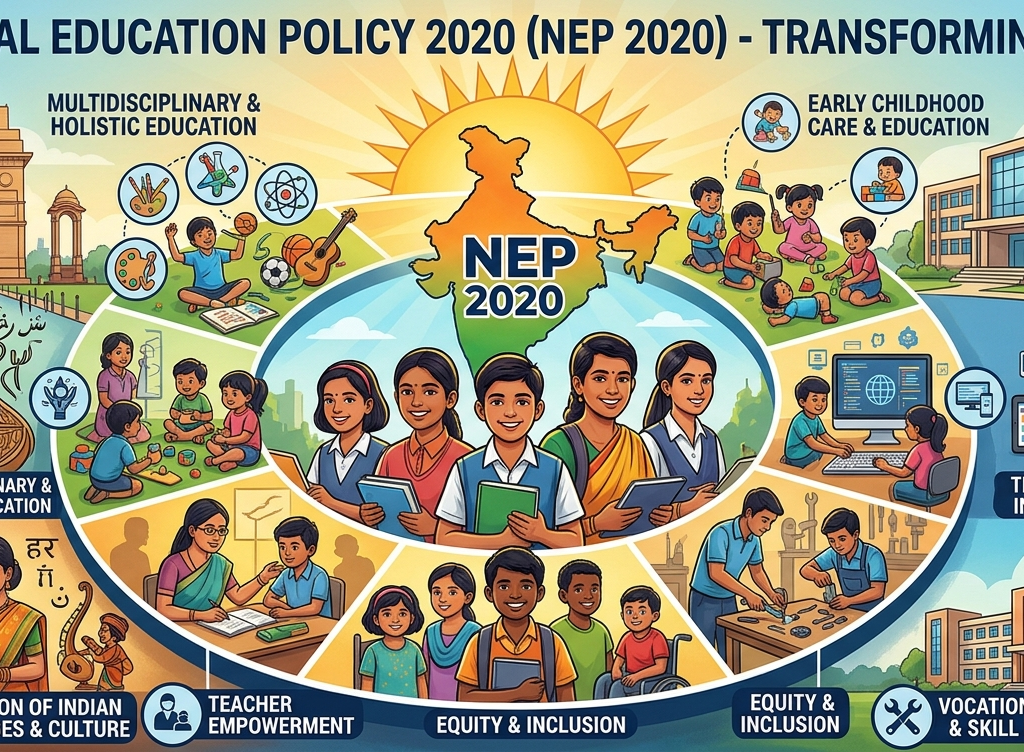
The National Education Policy 2020 is the biggest change to Indian education in over three decades. It replaced the policy of 1986 and is gradually reshaping how children learn from pre-school to university. Yet many parents still find it confusing. This guide explains the policy in plain language and tells you what it actually means for your child.
The New 5+3+3+4 Structure
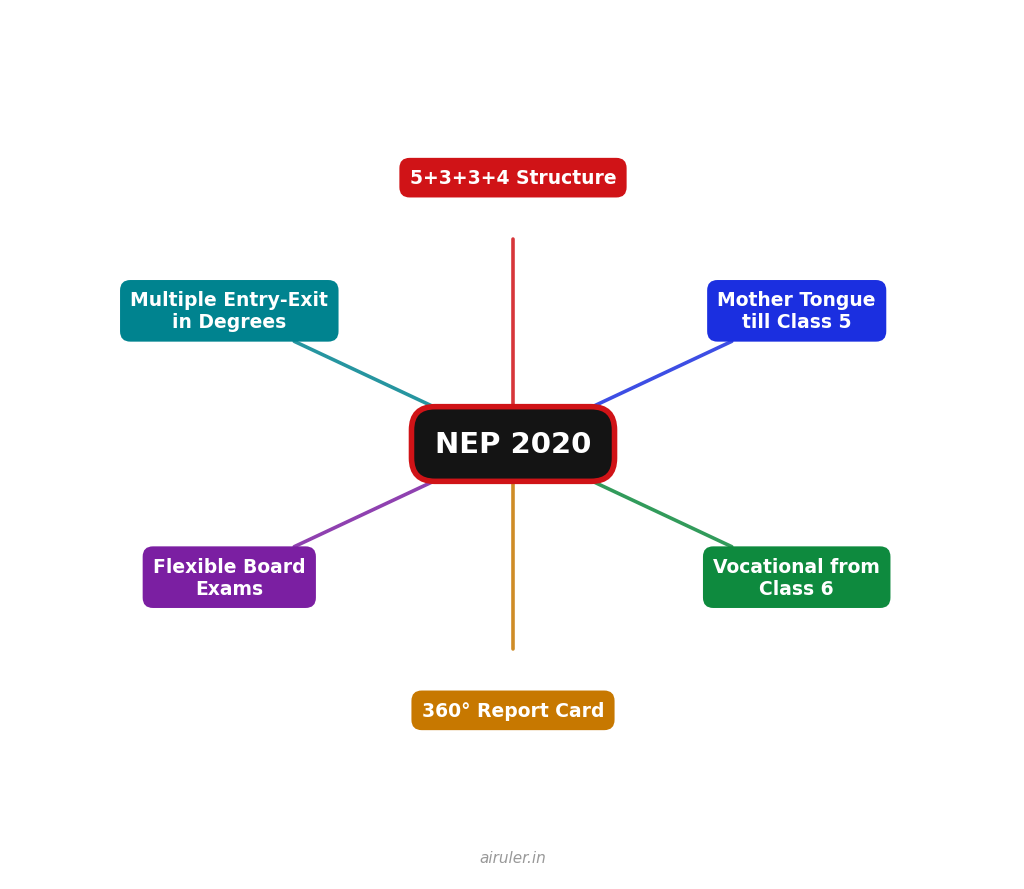
The old 10+2 system is being replaced by a 5+3+3+4 design that matches the stages of a child’s brain development.
| Stage | Ages | Classes | Focus |
|---|---|---|---|
| Foundational | 3–8 | Pre-school to Class 2 | Play-based learning, reading and number basics |
| Preparatory | 8–11 | Classes 3–5 | Discovery and activity-based learning |
| Middle | 11–14 | Classes 6–8 | Subject concepts plus vocational exposure |
| Secondary | 14–18 | Classes 9–12 | Deeper study with flexible subject choices |
What Changes Inside the Classroom
Three shifts matter most for parents. First, the policy encourages teaching in the mother tongue or regional language at least until Class 5, because children grasp concepts faster in the language spoken at home. English continues as a subject, so this does not weaken English skills.
Second, vocational education starts from Class 6. Children get exposure to practical skills — coding, gardening, carpentry, electronics — through hands-on projects and internships with local artisans. The idea is to remove the old wall between “studies” and “skills”.
Third, the report card is changing. Instead of marks alone, schools are moving towards a 360-degree progress card that also records creativity, teamwork and self-assessment. Rote memorisation is being pushed out in favour of understanding.
Board Exams and Higher Education
The policy aims to reduce the fear around board exams by making them test core competencies rather than memorised answers, and by allowing improvement attempts. In higher education, students get multiple entry and exit options — a certificate after one year, a diploma after two, and a degree after three or four — supported by an Academic Bank of Credits that stores earned credits digitally.
What Should Parents Do Now?
Do not panic about the transition. Changes are rolling out in phases, and your child’s school will inform you about each step. What you can do today is encourage reading in your home language, let your child try practical hobbies, and reduce pressure for pure marks. For official updates, always check the Ministry of Education website.
If your child is preparing for competitive exams later, a strong foundation matters — read our guide on building a smart study plan for competitive exams. Parents interested in technology in learning should also see the best free AI tools for students.
FAQ
Is NEP 2020 compulsory for all schools?
Education is a concurrent subject, so states are implementing the policy in phases. CBSE and many state boards have already begun aligning their curricula with it.
Will English be removed from schools?
No. The policy only encourages the home language as the medium in early classes. English remains a language subject and continues in higher classes.
Does NEP 2020 change board exams immediately?
Changes are gradual. Boards are redesigning question papers to test understanding, and formats keep evolving — always confirm the current pattern with your child’s school.